|

The next phase of India's electric mobility story will not be decided simply by how many EVs enter the market. It will be decided by what happens after they hit the road. How long does the battery last? How does it perform through India's heat, dust, rain and traffic? How quickly can it charge? How much of the charging infrastructure is actually being used? Can the vehicle be financed with confidence? And can the energy system supporting it remain reliable and secure?
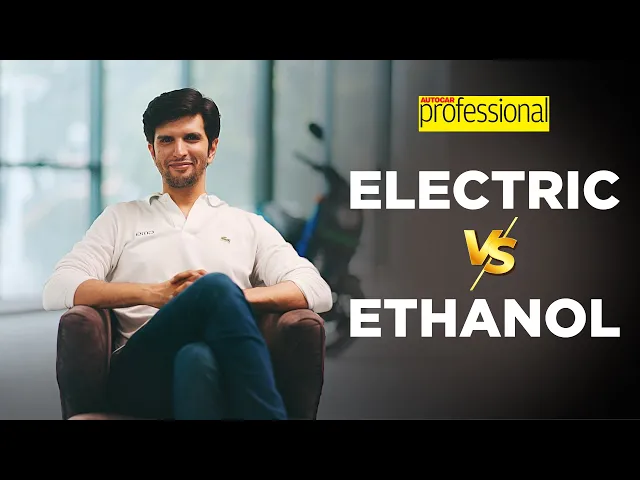
For high-utilisation electric mobility, these aren't secondary considerations. They determine whether the vehicle works as an asset. That was the central argument EMO Energy co-founder and CEO Sheetanshu Tyagi put forward in a recent conversation with Autocar Professional. The discussion covered battery economics, charging infrastructure, swapping, cybersecurity, ethanol and EV financing. Different subjects, but one underlying proposition: the vehicle is only one part of the equation. The energy system behind it determines how reliably and economically it can operate over its lifetime.
Battery value is measured over time
For an EV buyer, the battery is often reduced to one number: its upfront cost. But a battery earns its value over thousands of kilometres, hundreds of charging cycles and years of operation. A lower-cost battery that loses useful capacity earlier can ultimately cost more than one that delivers a longer and more predictable working life. The more relevant question, therefore, is not simply what the battery costs, but what it costs to operate it over its useful life. Tyagi argues that Indian battery technology should be evaluated on the value it creates over time rather than simply its initial price.
“Even if Indian systems are, in the absolute worst case, let's say 20% more expensive... creating a value-conscious, long-term ecosystem around battery cells [is what matters]. If you were paying 20% more, can you extend life by 40%? Can you give that user 40% more range over time?”
The distinction matters most in commercial mobility, where the vehicle is an earning asset. Every additional kilometre of usable battery life has economic value. Unexpected degradation, reduced range and downtime, meanwhile, directly affect the vehicle's ability to generate revenue. That also changes the financing equation. Once the performance and remaining useful life of an energy system can be understood, the battery becomes less of an uncertain cost and more of a measurable asset.
India demands a different battery
The operating environment makes that lifetime value harder to achieve. A commercial EV can encounter extreme heat, monsoon exposure, dust, rough roads, vibration, frequent acceleration and braking, multiple charging cycles and long operating hours—all within the same vehicle's daily life.
Tyagi's assessment is blunt:
“I honestly think the levels of dust, the levels of rain we have to deal with, the levels of vibration, shock, thermal cycling... I can't imagine a test which is not more aggressive in India, like as a real-world condition, anywhere else in the world.”
India's most successful mass-market vehicles built their reputations around reliability in these conditions. The Activa, Maruti and other high-volume platforms did not become household names simply because of their specifications. They earned trust by working repeatedly in the conditions in which Indians actually used them. Electric mobility will have to earn the same trust. For a commercial operator, reliability is not a marketing attribute. It is an operating metric. A vehicle that delivers a particular range or charging speed on paper but cannot maintain that performance through years of Indian conditions is not delivering the same value as one engineered around those conditions from the beginning.
Charging is really a utilisation problem
This is where the debate around fast charging and battery swapping becomes more nuanced. Swapping solves a visible problem: waiting. But reducing charging time at the vehicle level can create inefficiency at the system level. A swapping network requires additional battery inventory, tying up capital in batteries that are sitting at stations rather than moving vehicles.
Tyagi's criticism is structural:
“As a concept, swapping is starting to fail globally. The hard reality is even the companies who really started this are starting to see a shift in their unit economics not working out, because at the end of the day you need to have an extra battery, at least 30-40% extra batteries in your ecosystem, and you need to generate cash flow to get a four-year system out of this.”
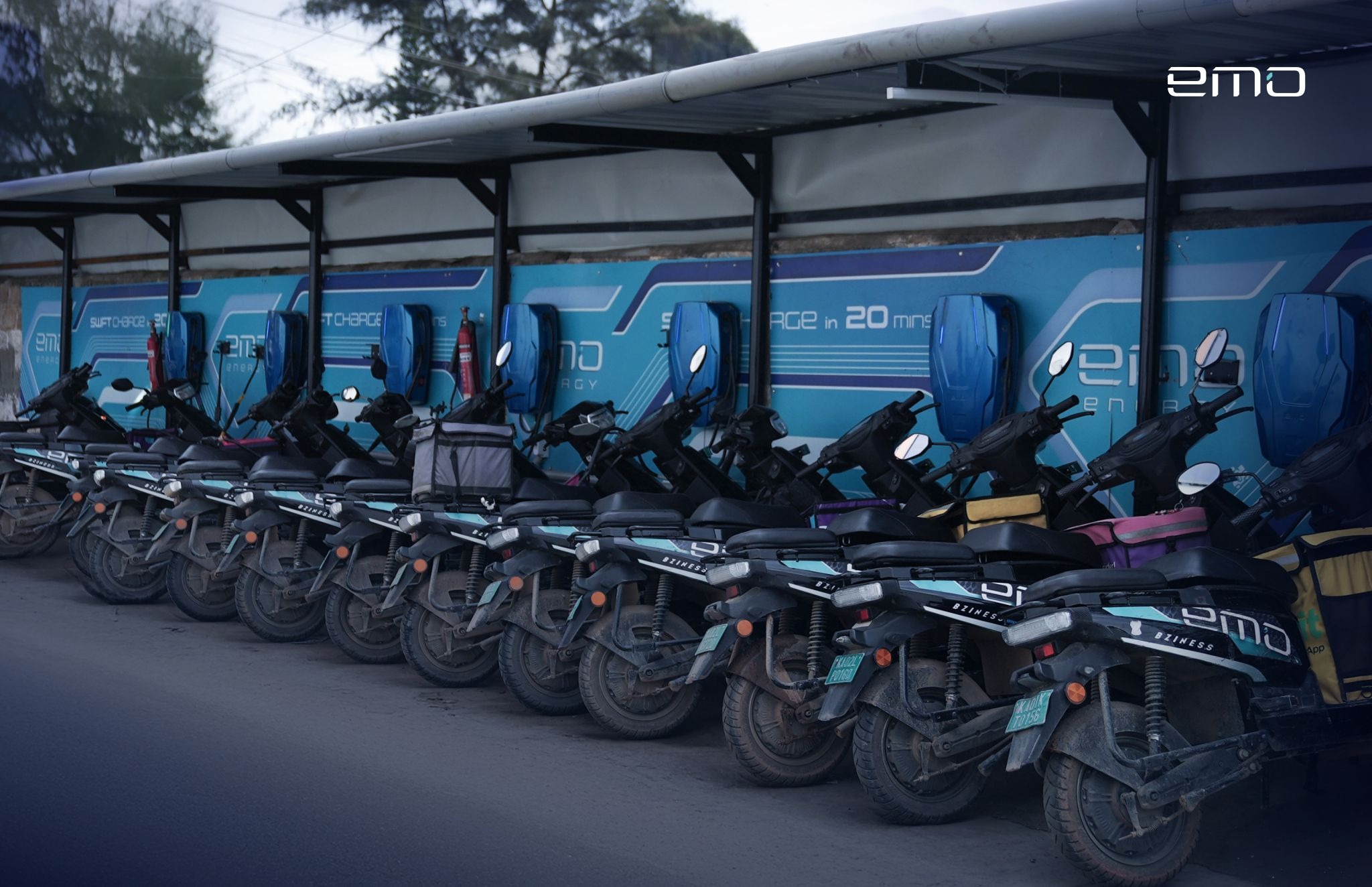
His alternative is fast charging integrated into the places where commercial riders already spend time. For a delivery rider, charging does not necessarily have to mean stopping work. If infrastructure is positioned around existing behaviour, collecting an order, taking a break or returning to a familiar location, the objective shifts from eliminating every minute of charging to making those minutes productive.
That puts utilisation at the centre of charging economics. Tyagi describes EMO's approach as infrastructure built around known demand rather than deployed speculatively. He points to charger utilisation as evidence:
“Our chargers use 18 hours a day, like continuously. There's literally fights around chargers today.”
The broader principle extends beyond any one charging network. A charger that can charge quickly but spends much of the day idle is still an underutilised asset. As India's charging infrastructure moves from experimentation to scale, the question will increasingly be not just how fast a charger can deliver energy, but how effectively that infrastructure is used.
An intelligent battery is also a security layer
The intelligence surrounding an EV battery is usually discussed in terms of State of Health, range, temperature and charging behaviour. But as vehicles become more connected, another consideration becomes increasingly important: security. Recent incidents involving the remote disabling of commercial three-wheelers have exposed a vulnerability that is easy to overlook when EV discussions focus primarily on hardware. Tyagi's question is straightforward:
“The core of this problem is why were they even able to do this. You can't do that to a Mahindra vehicle. You can't even do that to a Tesla.”
An electric vehicle is no longer simply a mechanical machine with an engine replaced by a motor. Its battery, BMS, vehicle controller, communications systems and software are increasingly interconnected. That connectivity creates opportunities for monitoring and optimisation, but it also creates new attack surfaces. An energy system that is increasingly intelligent therefore has to account for authentication, communication security, access control and the separation of critical vehicle functions from external interfaces. Battery intelligence is not only about making the battery perform better. It is also about ensuring that the systems controlling that performance do not become a vulnerability.
The real competition is petrol economics
When the conversation turns to ethanol, Tyagi avoids the usual EV-versus-everything-else framing.
“I have never felt like we're fighting against ethanol... our fight is petrol and diesel.”
Different propulsion technologies can make sense for different use cases. For a privately owned vehicle with relatively low annual utilisation, ethanol can offer a cheaper and faster transition than replacing the vehicle altogether. The economics change when utilisation rises. A commercial vehicle travelling 100-150 kilometres every day experiences energy costs very differently from a private car used for a few hundred kilometres a month. At that level of utilisation, the cost of every kilometre becomes central to whether the asset makes economic sense.
Tyagi puts the argument simply:
“Today petrol costs like 4 to 5 rupees a kilometre, and electric really allows that utilisation and operating cost to be much lower.”
The EV proposition, then, does not have to be about defeating every alternative fuel. It is about delivering better economics in the applications where vehicles work hardest.
The energy system is the product
Battery cost, degradation, Indian operating conditions, fast charging, swapping, cybersecurity, and financing may appear to be separate debates. They are not.
They are different parts of the same question: can the energy system behind an electric vehicle be made predictable enough to support high utilisation over its working life?
A commercial EV succeeds when its battery delivers useful performance over time, charging is available when the vehicle needs it, the connected system remains secure, operating costs stay competitive and the asset's future value can be understood well enough to finance it. That is a much bigger proposition than the vehicle itself. The next phase of India's EV growth will therefore not be determined only by who builds more vehicles. It will be determined by who can make the energy behind those vehicles reliable, measurable and economically predictable.The vehicle isn't the product. The energy system is.